


We all show different sides of ourselves in different relationships. That doesn’t make any of them fake. But it gets messy when the version we show is based more on imagined expectations than who we actually are.
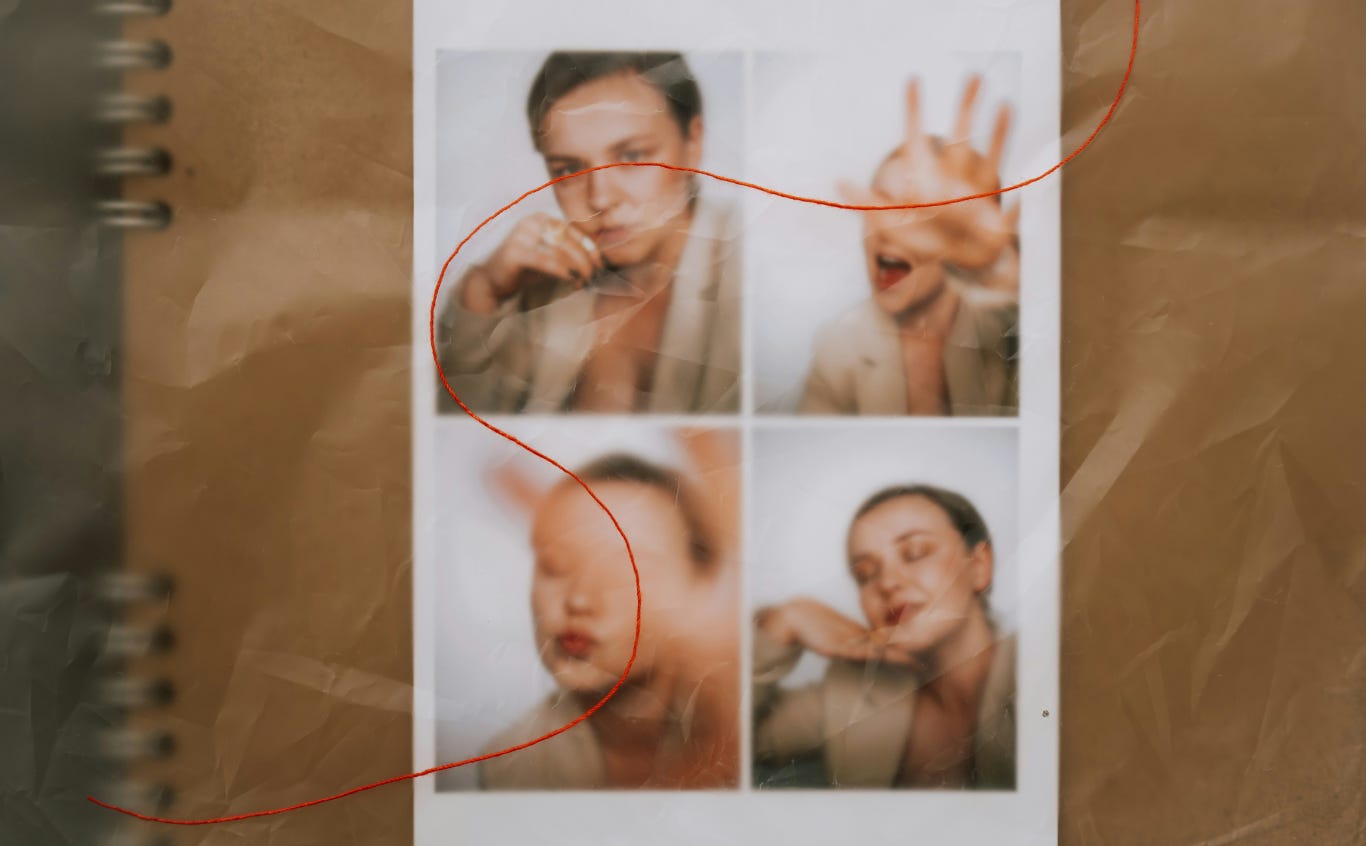
We’ve all had a moment where the words coming out of our mouths couldn’t be further from what we really want to say. And I get it. We can’t tell the barista who’s taken a solid five minutes to make our latte to “hurry the fuck up, I don’t wanna be here!” But wouldn’t it feel good if we could?
Question: How much of your personality is actually just good PR?
Obviously we can’t walk around spouting every thought that goes through our heads to every person who passes by. As a Canadian, I heed the call of social conformity to be kind and smile to everyone I meet. And honestly, I don’t mind it! Everyone loves a friendly Canadian. But what happens when we start forming our entire personality around what other people think of us, rather than just being our damn selves?
Why do we start acting weird when we want somebody to like us?
We’ve all had a moment where we were trying to impress someone and ended up coming off as a complete psycho. We want them to like us so badly that we think we need to use the right words, or have the right outfit, or know the right people for them to even notice us. We create these imaginary standards we think they’re holding us to and then do everything we can to meet them.
What’s the weirdest thing you’ve done to try and get someone to like you?
I once joked with a girl crush that if I didn’t buy anything on our shopping trip, I would get my nipples pierced. And you best believe that when she called me out for not buying anything, I doubled down and got them pierced that day. That’s how much I wanted to impress her! It was a seriously painful lesson on the cost of doing something just to impress another person. Spoiler alert: It did not get her to like me any more.
Crushes may be the universal metric for just how weird we get when we want someone to like us, but we do it in other scenarios too. Whatever school, work, or social club you’re part of, you want to fit in. And you’ve probably said or done something that is not “you” on your quest to be accepted. It’s normal, and sometimes necessary, but it gets exhausting when that becomes another personality you have to manage.
Who decided on this ideal version of you?
There are loads of psychology articles that explain where your inner critic comes from, why it’s there, what it needs, and all that jazz. I am not an expert on the mechanics of it all, but I am very well acquainted with my inner critic. She loves to constantly and loudly tell me what others think of me and the standards I should be living up to so they’ll accept me. The more time passes, the more I realize that her standards always seem to be just above where I am.
Without veering into a diary entry, I’ll just say I realized that my inner critic made it hard for me to be myself, even when I was by myself. It took some conscious effort to untangle my voice from hers and recognize that the ideal version I was holding myself to wasn’t mine. We do that same thing with other people. We create a version of ourselves that they’ll approve of and then become that person when we’re around them.
But truly, do you like the version of yourself those people approve of?
Do you even like those people?
What if being yourself is not a fixed experience?
There are so many layers of what it means to be human and so many layers of what it means to be you. Realistically, we can’t show every person we meet every single side of ourselves. Mainly because it’s probably completely inappropriate, but also because some things don’t need to be broadcast for all to hear. Ironically, I am doing some broadcasting with this piece. For those of you who know me personally, I’m pretty sure a good number of you didn’t know I had my nipples pierced, or that I like girls. Surprise! That’s a side of myself that, up until now, I haven’t been very vocal about. And that’s okay.
I wasn’t being any less myself by not sharing every piece of me with everyone. And you’re not being any less yourself if you choose to show up in different ways in different relationships because of what’s appropriate.
I don’t think that being yourself means giving everyone access to every side of you. But the version they get should still be a reflection of who you actually are. Not who you think you should be.
What did this make you think of?
When do you notice you’re spending more time trying to be the version of yourself someone will like than just being yourself?
Subscribe to Sydney Buchanan for new explorations each Sunday.